


Case study: The Branches
A history of one of New Zealand's most remote high country stations, by David and Karie Thomson and Poppie Johnson, published by Laughing Penguin Press in April 2026.
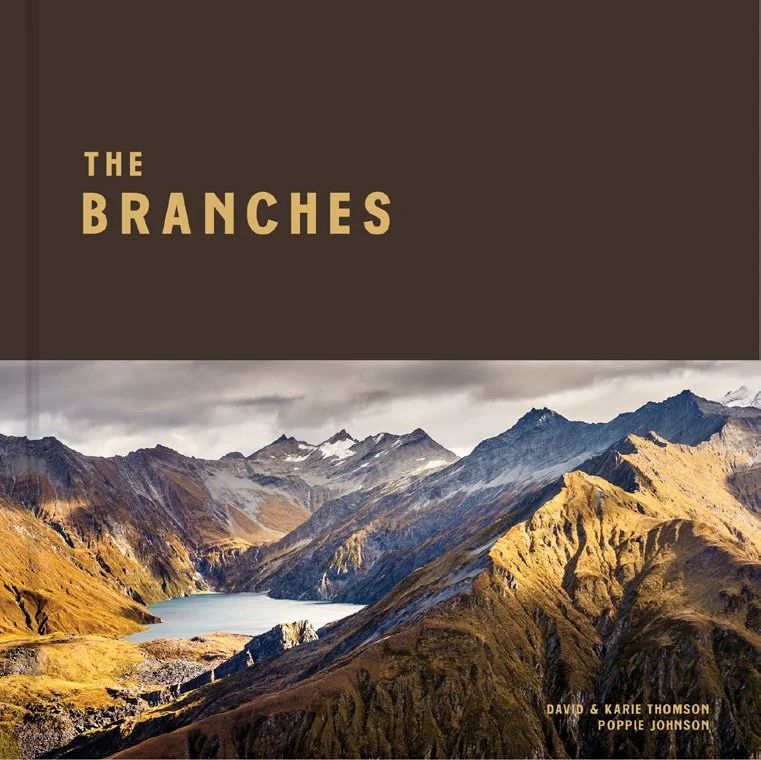
The Branches is a high country station at the headwaters of the Shotover River, reached by the Skippers road over Skippers Saddle and through the gorge, and it has been farmed as a run since 1874. In February 2024 David Thomson, one of the station's partners, engaged me to research and write its history, and the finished book went to New Zealand bookshops a little over two years later.
What the client wanted
David and Karie Thomson had been partners in The Branches for nearly 20 years, and the station's managers had been telling them that the stories were slipping away as the people who remembered the early days grew older. My contract asked for a manuscript covering the history of the land and its people from early Māori to the present, somewhere between 70,000 and 90,000 words, with interviewing, archival research and contemporary photography as part of the work. The writing was scheduled to run from September 2024 to December 2025, and design, editing and print sat outside that contract, to be quoted separately.
The brief and its constraints
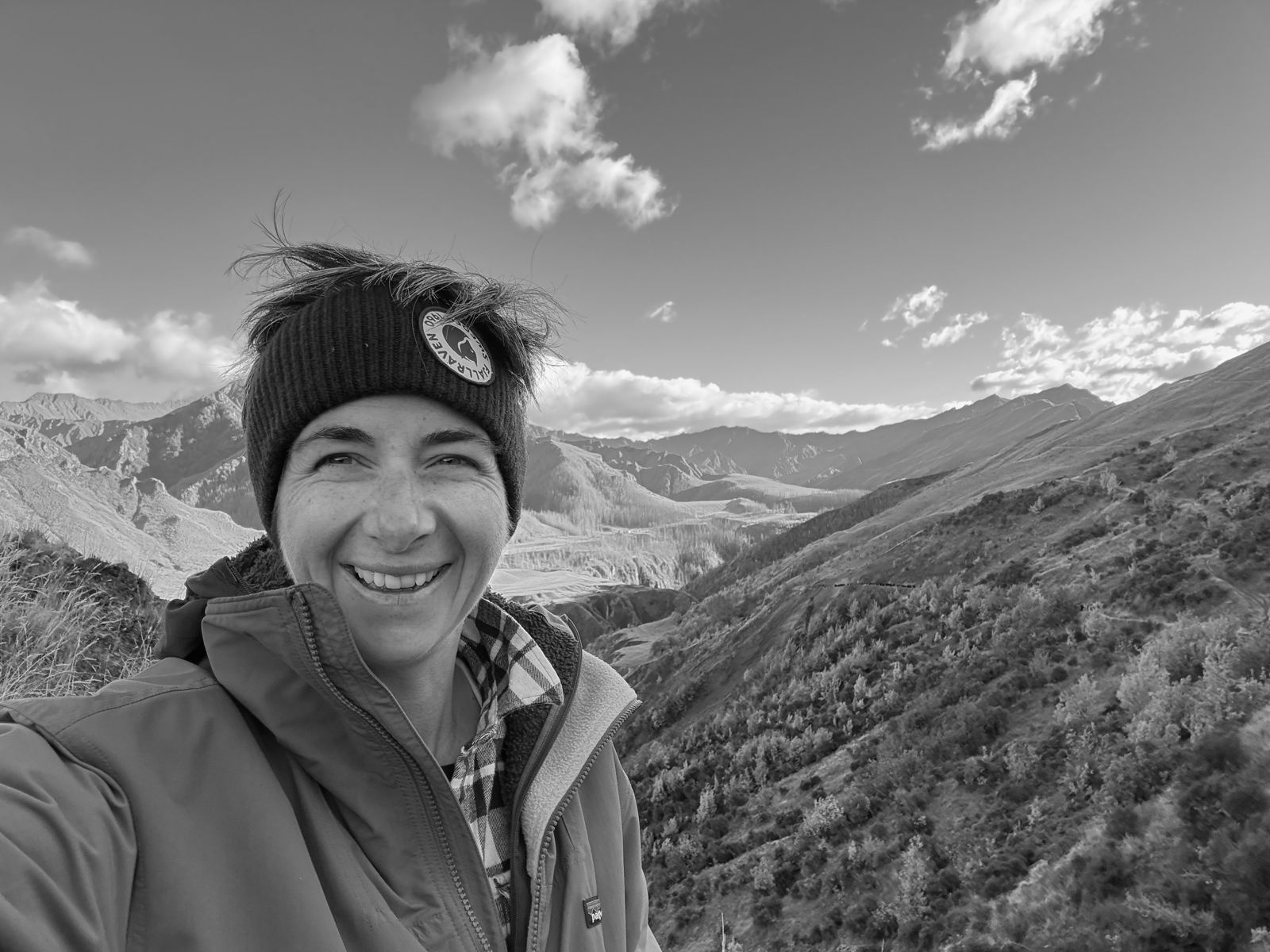
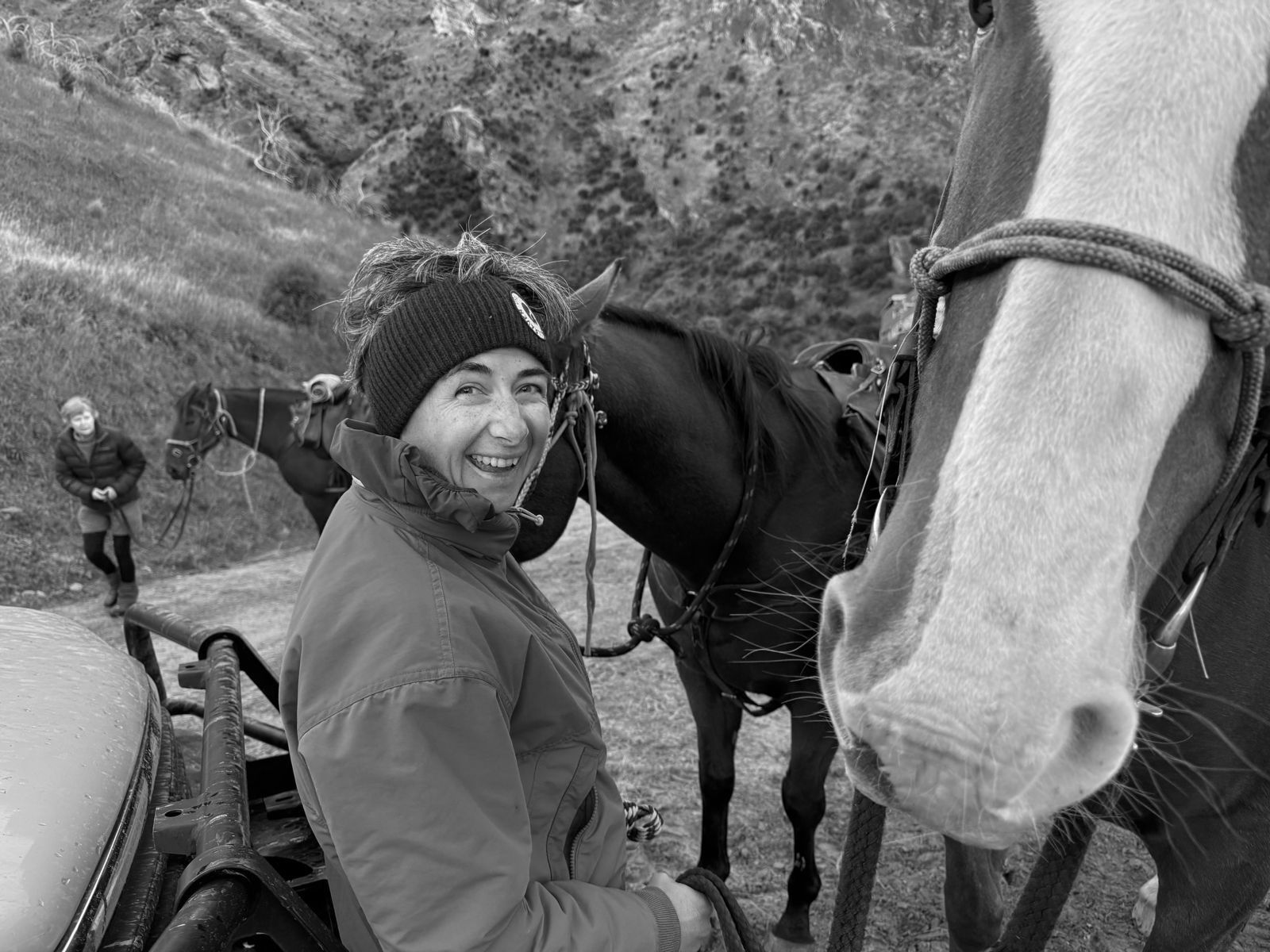
Beyond Skippers Canyon the road to the station is often closed at the Blue Slip for months at a time, and nobody lived on the land year-round until the 1950s. I made four visits to the station over the course of the project, driving in on some of them and flying in twice.
Across roughly 150 years of history the record is uneven. Before 1900 the documents are mostly land transactions, court proceedings and the occasional newspaper report, so the early chapters had to be built from official records, while the later chapters could draw on the memories of people who had lived and worked there.
Sources were spread around the country and beyond it. Run records and research papers sat at the Hocken Library in Dunedin, mortgage and land files at Archives New Zealand in Dunedin, recollections and photographs at the Lakes District Museum in Arrowtown, and much of the twentieth-century material was in photo albums kept by the families of former owners. Some of the partners live in the United States.
How I did it
I started with interviews. My first field trip was in late September 2024, when I flew into Queenstown and spent four days in the district interviewing the families of former owners and others who knew the station, and I went back by road at the end of November. The interviews were recorded and transcribed, and by the time the book was finished its acknowledgements named 29 people who had shared their stories, from those families to the current managers, the partners, people on neighbouring stations and a gold miner with a claim in the valley.
Alongside the interviews I worked through the archives. At the Hocken I used the Peter Chandler Research Papers and the business records of Donald Reid & Co., at Archives New Zealand the mortgage adjustment files from the 1930s, and at the Lakes District Museum a set of personal recollections of station life along with the museum's photograph collection. Historic newspapers filled in the nineteenth century.
I drew up an outline in October 2024 and had a working draft by the end of that December. The book follows the runholders in order, and it settled into five parts: the land and its early Māori history, the gold rush and the first runholders, the runholders from 1919 to 1970, the family who farmed it from 1970 to 2001, and the partnership and managers who run it now.
Chapters went back to the families concerned and to the client for comment, and their corrections and additions were worked into the next draft. The manuscript went through three rounds of review in all. An external copy editor worked through the chapters in the second half of 2025, a second editor proofread the laid-out pages in November and December, and the two of them kept a style sheet for the book. Documentary sources are cited in endnotes with their archive reference numbers, and interviews are dated in the notes.
Design ran alongside the writing. I briefed designer Gary Stewart of The Gas Project in Central Otago, the first numbered layout arrived in May 2025, and type tests and cover concepts followed over the winter. The layout went through more than a dozen numbered versions between May and December 2025 as text, images and captions were settled, and the high-resolution print files are dated 18 December 2025.
Quotes came in from four printers, one in Christchurch, one in Australia and two based in Hong Kong. The job went to Asia Pacific Offset, who sent folded-and-gathered sheets from the run in late January 2026 so the printed pages could be checked before binding. Nationwide Book Distributors in North Canterbury handles trade distribution, and I prepared the sales sheet for booksellers, the media list and the list of complimentary copies. The books arrived on schedule and were in bookshops, including Paper Plus and Whitcoulls, a week after they landed in New Zealand.
The result
The Branches is a 290 x 290 mm hardback of 256 pages, section-sewn and cased in dark brown buckram with foil and embossing, with a half-height jacket and illustrated endpapers. It carries more than 100 photographs in black and white and colour, drawn from family collections, museum archives, professional photography and my own pictures from the station, along with botanical illustrations, sketches and photographs by one of the station's managers. It was printed in a limited run of 1,000 copies (ISBN 978-0-473-77009-9, RRP $85) and published by Laughing Penguin Press on 1 April 2026.